What is Intuit and How It Helps Small Businesses
In today’s fast-paced digital world, managing finances, taxes, payroll, and business operations efficiently is crucial for small businesses. One of the most trusted names in financial software and business solutions is Intuit. From startups to established small businesses, millions rely on Intuit’s tools to simplify complex financial tasks and improve productivity.
This article explains what Intuit is, its main products, and how it helps small businesses grow, save time, and stay compliant.
What is Intuit?
Intuit Inc. is a global financial software company that develops tools for accounting, tax preparation, payroll, and personal finance. Founded in 1983, Intuit has become a leading provider of business and financial solutions for individuals, small businesses, and accountants.
The company is best known for its flagship products:
- QuickBooks (accounting software for businesses)
- TurboTax (tax filing software)
- Credit Karma (personal finance and credit monitoring)
- Mailchimp (email marketing and automation platform)
Intuit’s main goal is simple:
“To power prosperity around the world.”
It focuses heavily on helping small businesses manage their financial operations easily without needing advanced accounting knowledge.
Why Intuit is Important for Small Businesses
Small businesses often struggle with financial management, tax compliance, payroll handling, and tracking expenses. Hiring professional accountants can be expensive, and manual bookkeeping is time-consuming.
This is where Intuit becomes extremely valuable.
Intuit provides easy-to-use digital tools that automate financial processes, reduce human error, and help business owners make smarter decisions.
1. QuickBooks – The Core of Small Business Accounting
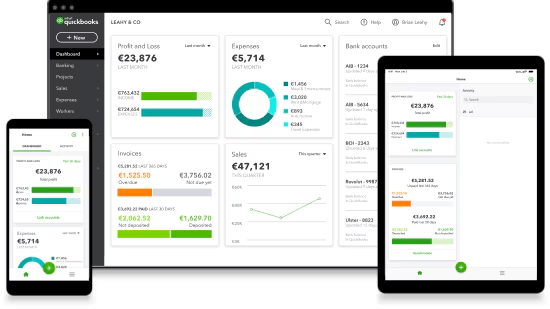
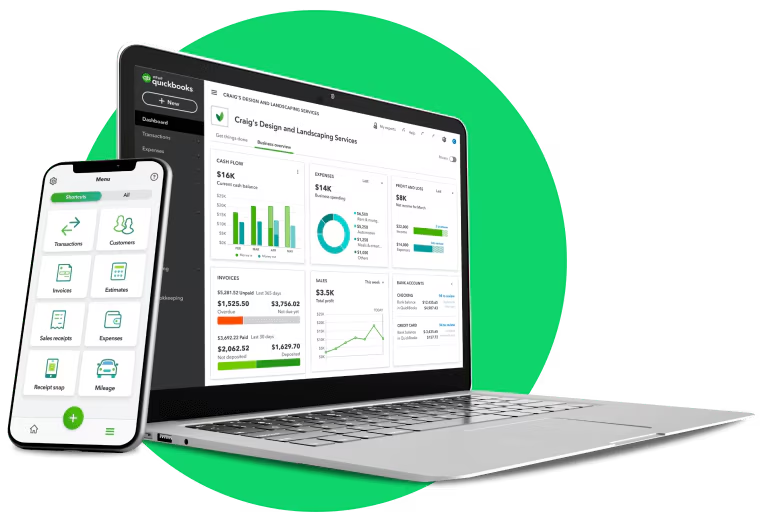
The most popular Intuit product for businesses is QuickBooks.
QuickBooks helps small business owners manage:
- Income and expenses
- Invoices and payments
- Payroll
- Tax calculations
- Financial reports
How QuickBooks Helps Small Businesses:
✔ Easy Bookkeeping
Instead of using spreadsheets, QuickBooks automatically records transactions and organizes them in one place.
✔ Invoice Management
Businesses can create professional invoices and send them to clients in seconds.
✔ Expense Tracking
QuickBooks connects with bank accounts and tracks all business expenses automatically.
✔ Financial Reports
It generates profit & loss statements, balance sheets, and cash flow reports that help in decision-making.
✔ Tax Preparation
QuickBooks simplifies tax filing by organizing financial data throughout the year.
2. TurboTax – Simple Tax Filing Solution
Tax filing is one of the most stressful tasks for small business owners. TurboTax makes it easier by guiding users step-by-step through the tax process.
Benefits of TurboTax:
- Easy question-based interface
- Automatic tax calculations
- Error checking before submission
- Maximized tax deductions
- E-filing support
Even users with no accounting knowledge can file taxes correctly using TurboTax.
3. Mailchimp – Smart Email Marketing Tool
Mailchimp, owned by Intuit, is a powerful email marketing platform that helps small businesses grow their customer base.
Features include:
- Email campaign creation
- Customer segmentation
- Marketing automation
- Analytics and performance tracking
- Landing page creation
How it helps businesses:
- Increases customer engagement
- Boosts sales through email campaigns
- Automates marketing tasks
- Builds brand awareness
4. Credit Karma – Financial Health Monitoring
Credit Karma helps users and business owners monitor credit scores and financial health.
Key benefits:
- Free credit score monitoring
- Financial recommendations
- Loan and credit card suggestions
- Identity protection alerts
For small business owners, maintaining a strong credit score is important for loans and financial growth.
How Intuit Helps Small Businesses in Real Life
Let’s look at how Intuit supports small business operations step-by-step:
1. Saves Time
Manual accounting takes hours. Intuit automates most tasks, saving valuable time for business owners.
2. Reduces Errors
Human errors in accounting can be costly. Intuit software reduces mistakes through automation.
3. Improves Decision Making
Financial reports help business owners understand profits, losses, and growth opportunities.
4. Supports Business Growth
With better financial control, businesses can focus on expansion instead of paperwork.
5. Ensures Tax Compliance
Intuit tools help businesses stay compliant with tax laws and avoid penalties.
Benefits of Using Intuit for Small Businesses
Here are the main advantages:
✔ User-Friendly Interface
No advanced accounting skills are required.
✔ Cloud-Based Access
Access financial data anytime, anywhere.
✔ Automation
Reduces manual workload through smart automation.
✔ Scalability
Suitable for freelancers, startups, and growing companies.
✔ Integration
Works with banks, payment systems, and third-party apps.
Who Should Use Intuit?
Intuit products are ideal for:
- Small business owners
- Freelancers
- Startups
- Online stores (eCommerce)
- Accountants and finance professionals
Even non-technical users can easily manage business operations using Intuit tools.
Intuit and Digital Transformation
In recent years, Intuit has focused on artificial intelligence and automation. Its tools now use smart algorithms to:
- Predict cash flow
- Categorize expenses automatically
- Suggest tax savings
- Detect financial trends
This makes business management more efficient and data-driven.
Challenges of Using Intuit
While Intuit is powerful, it also has some limitations:
- Subscription costs may be high for very small startups
- Advanced features require learning
- Internet connection is required for cloud tools
However, the benefits usually outweigh these challenges.
Conclusion
Intuit is one of the most important financial technology companies in the world, especially for small businesses. With tools like QuickBooks, TurboTax, and Mailchimp, it simplifies accounting, tax filing, and marketing.
For small business owners, Intuit is not just software—it is a complete financial management ecosystem that saves time, reduces stress, and helps businesses grow efficiently.
In a competitive market, using smart tools like Intuit can be the difference between struggling and scaling successfully.